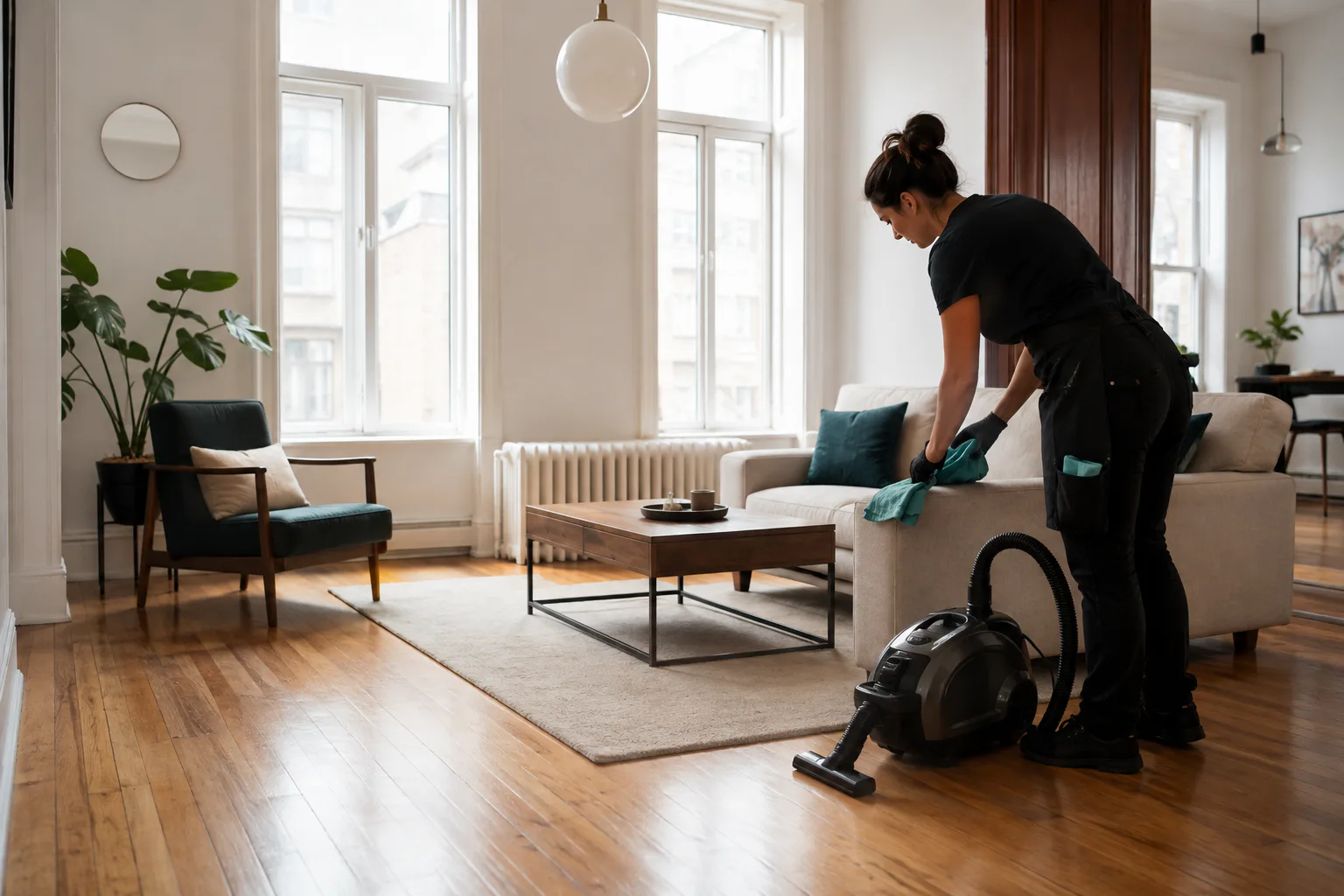
The short answer: time follows scope, not bedroom count
House cleaning time depends mainly on bathrooms, kitchen use, surface condition, clutter, pets, levels, and add-ons. Estimate it by counting the zones actually being cleaned, classifying each as maintenance or reset work, then separating the oven, windows, and cabinet interiors.
One number for a two-bedroom apartment or three-bedroom house hides too much. Two bathrooms repeat the same detailed work. A basement adds floors and stairs. A kitchen used every day can take longer than two lightly occupied bedrooms.
| Factor | What adds time | What to provide |
|---|---|---|
| Kitchen | Grease, appliance interiors, dishes, detailed fronts | Name every add-on |
| Bathrooms | Deposits, glass shower, grout, multiple fixtures | Count every bathroom |
| Floors | Several levels, carpet, hair, salt and grit | State surface and finish |
| Access | Parking, elevator, concierge, long route from entrance | Describe arrival |
| Condition | Buildup or first visit | Send representative photos |
Step 1: write the expected result room by room
Make a short list for the entrance, kitchen, each bathroom, bedrooms, and living spaces. For every room, separate visible surfaces, floors, and one important detail. Twenty clear tasks are easier to estimate than “complete cleaning for the whole house.”
Remove rooms that will not be handled. A closed bedroom, confidential office, or excluded basement reduces scope. Record delicate surfaces that need a specific product; selecting and testing the product also takes time.
- Included rooms
- Excluded rooms
- Visible surfaces
- Floors
- Priority detail
- Sensitive material
Step 2: separate maintenance, deep cleaning, and specialized work
Maintenance keeps an existing baseline. Deep cleaning catches up on edges, deposits, and details. Post-renovation work handles fine dust that settles again. Combining all three in one estimate almost always creates an unrealistic window.
Classify each zone. If the kitchen needs a reset while bedrooms need maintenance only, say so. The quote can then put time where the result will show instead of applying the same intensity everywhere.
- Routine maintenance
- Reset work
- Post-renovation dust
- Stain or damage to assess
- Specialized add-on
Step 3: count slowdowns a wide photo cannot show
Parking, a fifth floor, a booked elevator, a distant entrance, or a code collected from the concierge can use part of the window. Inside, items on counters and cables on floors force the provider to move, decide, or work around things.
Fifteen to thirty minutes of occupant preparation can make the estimate more predictable: pick up clothes, clear the sink, put away documents, and group small items. This is not cleaning before the cleaner arrives. It makes the agreed scope accessible.
- Parking and walking route
- Stairs or elevator
- Code, key, or concierge
- Items on floors
- Crowded counters
- Pets to secure
Step 4: turn the estimate into a range with a stopping rule
Ask for a range or fixed scope tied to the list, then confirm what happens when the condition exceeds the description. The better question is not only “how many hours?” It is “which tasks will be finished before more time is requested?”
Choose three priorities and a stopping rule. The provider can contact you, leave add-ons for another visit, or continue with approval. Without that rule, the client discovers an extra charge or unfinished list afterward.
- Estimated range or fixed scope
- Number of workers
- Three priorities
- Contact person
- Additions only with approval
- Final list retained
Frequently asked questions
How many hours does it take to clean a house?
No reliable duration exists without bathroom count, kitchen condition, levels, access, and add-ons. Ask for a range tied to a precise list rather than a number based only on bedrooms.
Why does the first cleaning take longer?
The first visit often removes buildup and reveals the surfaces, access, and true priorities. Later visits become more predictable when the scope stays stable.
How can I reduce time without reducing quality?
Clear floors and counters, empty the sink, put away documents, exclude unnecessary rooms, and choose three priorities. The provider can spend more of the visit cleaning.
Ready to turn this list into a request?
Share your postal code, property type, priorities, and preferred date. You can confirm the details before any appointment.
Get a free quote now — no obligation