The short answer: dry dust, surfaces, then floors
For a deep clean, start high and finish at floor level. Remove items and dry dust first, clean surfaces from top to bottom, then handle the kitchen and bathroom before vacuuming and washing floors. Keep the oven, refrigerator, windows, and cabinet interiors as clearly named add-ons.
Order matters. Washing a floor before dusting light fixtures or cabinet tops creates a second pass. Work each zone to a sensible stopping point, but leave floors until the final movement through the home.
- Clear surfaces
- Remove dry dust
- Clean from high to low
- Handle kitchen and bathroom
- Vacuum and wash floors
- Inspect in daylight
Prepare products without damaging finishes
Identify oiled or varnished wood, natural stone, quartz, laminate, stainless steel, and cooktops. A product that works on one surface can dull or mark another. Test in a hidden spot and follow the label. A disinfectant contact time is not permission to let every product dry on every material.
Never mix bleach with another cleaner. Health Canada warns that bleach reacts with acids and ammonia and can produce toxic gases. Ventilate, wear the protection stated on the label, and keep products in their original containers.
- Labels read before work
- Products separated by use
- Different cloth colours
- Suitable gloves
- Ventilation available
- No improvised mixtures
Kitchen: remove grease without turning the visit into a teardown
Start with cabinet tops, the hood exterior, and reachable light fixtures. Continue with fronts, handles, backsplash, counters, and sink. Move only the small appliances named in the scope. Heavy appliances, filters, the oven interior, and the space behind a refrigerator change both time and risk.
Empty a cabinet only when its interior is included. A provider should not decide where food, medication, or fragile dishes belong. In an occupied home, group small items in one bin per zone so you control where they return.
- Cabinet tops and fronts
- Hood exterior and backsplash
- Counters and sink
- Handles and switches
- Appliance exteriors
- Interior add-ons confirmed separately
Bathroom: allow product time, then rinse
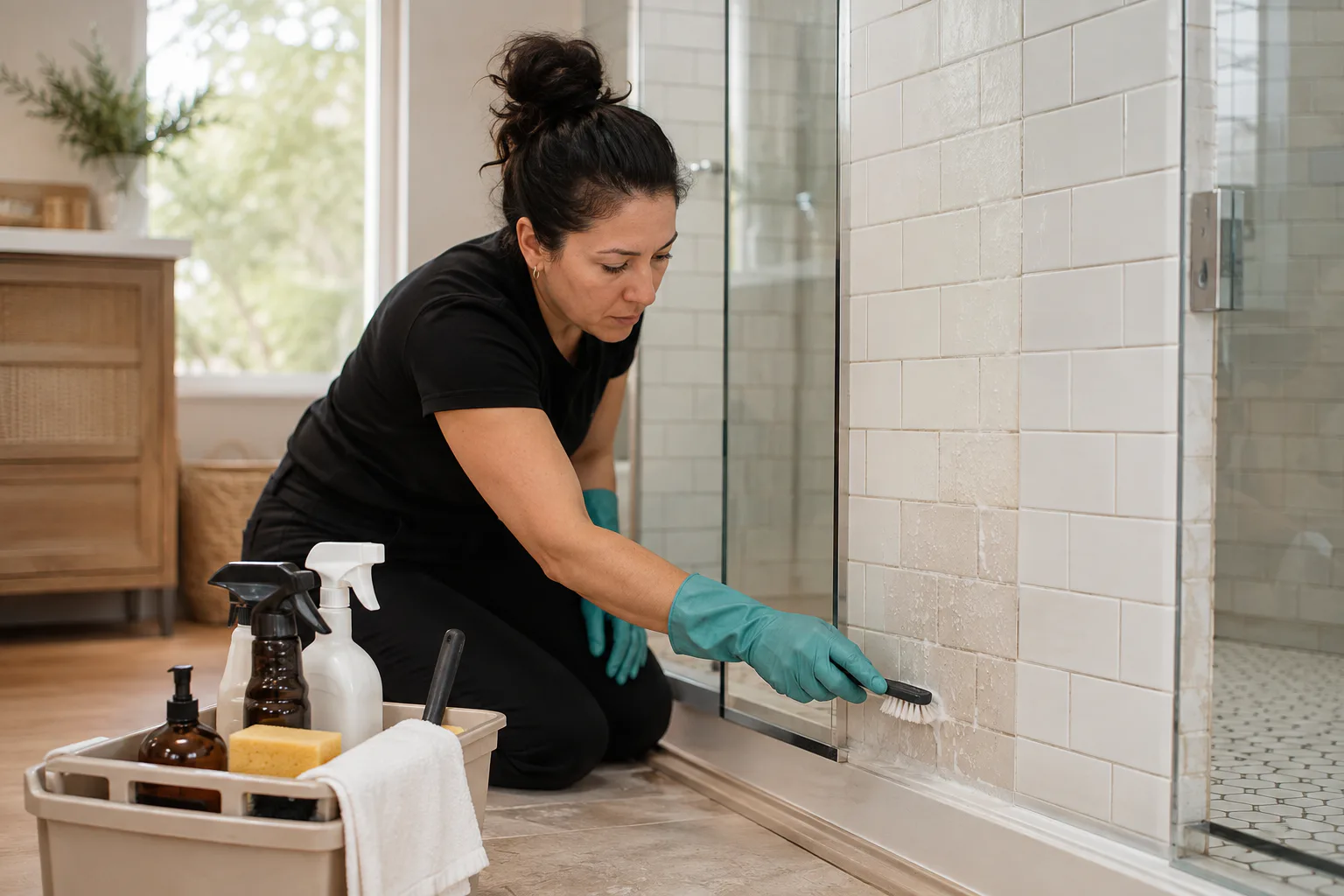
Remove bottles, textiles, and counter items first. Treat deposits according to the material, then clean the shower, tub, sink, and toilet. Old stained caulk or damaged grout may remain marked after cleaning; that defect can need repair rather than harder scrubbing.
Keep one cloth for the toilet and do not carry it into the kitchen. Rinse surfaces when the label requires it and dry fixtures so remaining marks are visible. A high fan or broad mould problem falls outside routine work when it needs special access or assessment.
- Shower or tub
- Sink and fixtures
- Toilet including base
- Mirror and cabinet exterior
- Baseboards and floor
- Textiles returned after drying
Living spaces: follow the edges routine cleaning misses
Dust frames, shelves, baseboards, window ledges, doors, and reachable radiators before furniture. Fragile blinds, art, electronics, and collections need a clear instruction. A barely damp cloth may be safer than a direct spray that settles into seams.
Vacuum upholstered furniture only when the tool and fabric allow it. Decide before the visit who moves a heavy sofa. Finish with floors, working from the farthest room toward the exit and using a method suited to the finish.
- Ledges and baseboards
- Doors and handles
- Reachable radiators
- Under light furniture
- Textiles according to label
- Floors completed last
Turn the checklist into comparable quotes
Mark each line included, add-on, or excluded. Add photos of the hardest zones, number of levels, stairs, parking, and pets. Two quotes can only be compared when providers receive the same information.
Choose three priority results. If the real condition takes more time, those priorities keep the visit focused. Require approval before any extra hour or task, then keep the final list in writing.
- Same list sent to each provider
- Photos without sensitive details
- Three numbered priorities
- Add-ons priced separately
- Written approval rule
Frequently asked questions
What is included in a deep clean?
A deep clean normally addresses surfaces, edges, and buildup missed by routine service. Appliance and cabinet interiors, windows, walls, and moving furniture should be confirmed separately.
What order should a deep clean follow?
Clear surfaces, remove dry dust, work from high to low, clean the kitchen and bathroom, then finish with vacuuming and floor washing.
Should I buy products before the visit?
Confirm who supplies products and identify sensitive materials. If you require a product, leave it in its original container with a readable label.
Helpful sources
Ready to turn this list into a request?
Share your postal code, property type, priorities, and preferred date. You can confirm the details before any appointment.
Get a free quote now — no obligation