Wait for the real end of the work
Dust keeps being produced while sanding, cutting, drilling, or touch-ups continue. Starting early means repeating the work. Ask contractors to remove debris and clear surfaces.
Keep water and electricity available. Flag fresh paint, uncured sealant, and surfaces still covered by protective film.
- Sanding finished
- Debris removed
- Paint and sealants sufficiently dry
- Ventilation available
Work high to low, dry before damp
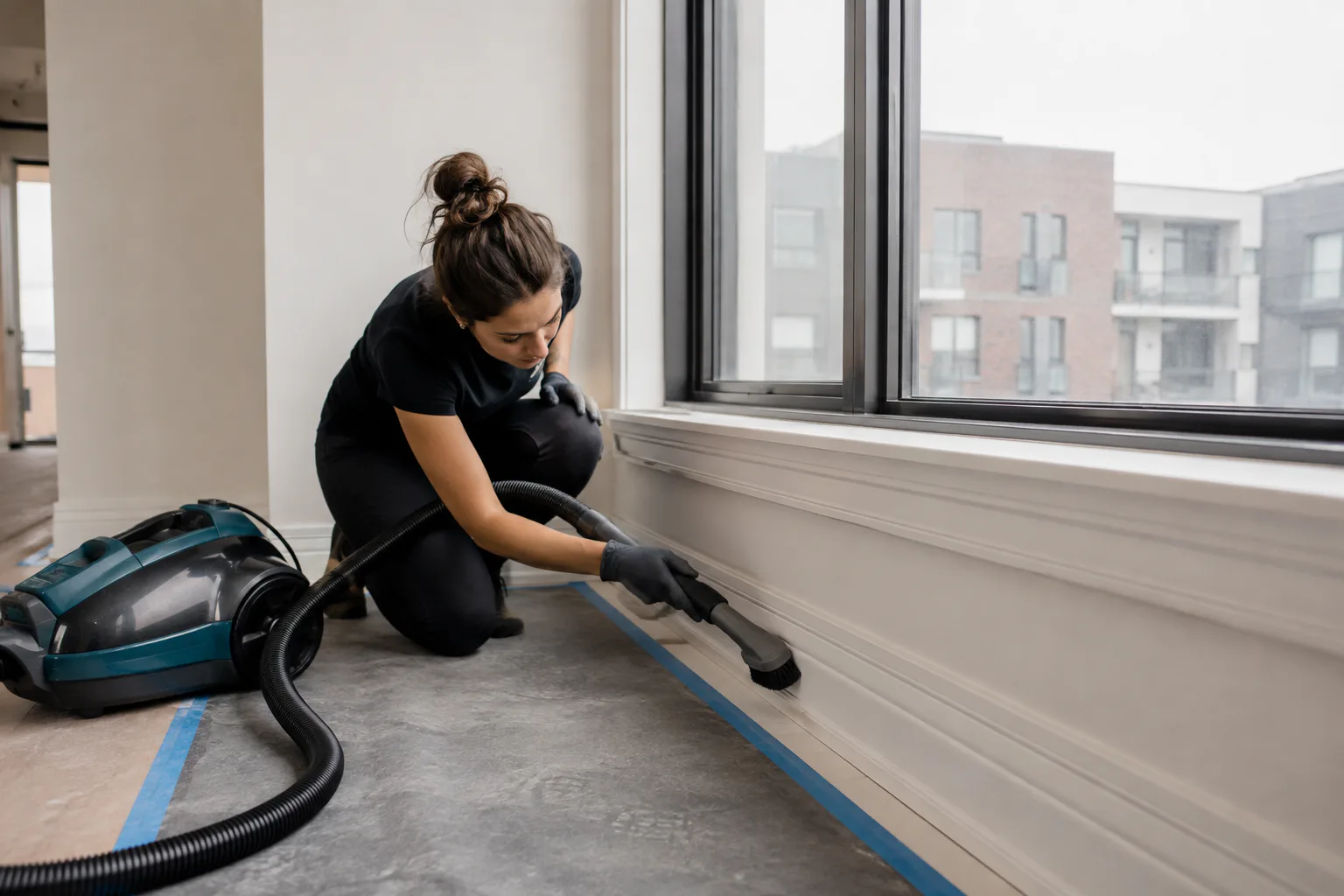
Fine dust hides on top of frames, fixtures, cabinets, and ducts. It should be vacuumed with suitable equipment and filtration before lower surfaces are washed.
An overly wet cloth turns powder into paste and can push it into joints. Light passes with clean cloths are easier to control.
- Tops of doors and cabinets
- Ledges and baseboards
- Inside emptied storage
- Floors last
Plan for dust that resettles
Even after careful work, suspended particles can land for several hours. A focused second wipe is often more useful than prolonged scrubbing during the first pass.
Change cloths and water frequently. Check ventilation filters according to the manufacturer or the professional who services the system.
- First vacuum pass
- Controlled damp wiping
- Settling time
- Second pass on horizontal surfaces
Do not improvise on residue
Paint, silicone, adhesive, grout, and cement need different methods. The wrong scraper or solvent can scratch glass, dull a counter, or remove a finish.
Photograph the residue and identify the product with the contractor when possible. If the material is uncertain, exclude the area until a safe method is known.
- Product identified
- Surface identified
- Test in a hidden area
- Specialist work when risk is high
Ready to turn this list into a request?
Share your postal code, property type, priorities, and preferred date. You can confirm the details before any appointment.
Get a free quote now — no obligation